Attack a Rider
Order the tame to attack an enemy rider on a mount.
Controls
- Whistle Attack This Target
CreatureShoulder Pet
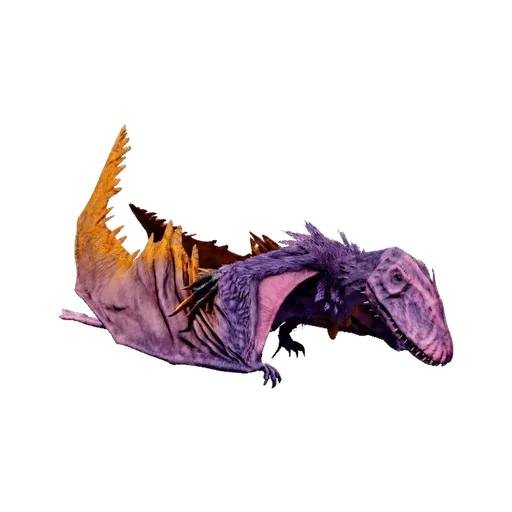
The Dimorphodon is a small flyer carnivore used primarily as a shoulder pet. It reduces the weight of inventory items for the survivor carrying it. This makes it ideal for transporting heavy resources over long distances without slowing movement. It can be airlifted by Quetzal or Karkinos for fast deployment.
Players tame it for its passive weight reduction and mobility support.

| Stat | Base | Wild +/lvl | Tamed +/lvl | Wild growth |
|---|---|---|---|---|
| Health | 125 | +25 | +4% | |
| Stamina | 150 | +15 | +2% | |
| Torpidity | 0 | +0 | +0% | |
| Oxygen | 150 | +15 | +2% | |
| Food | 900 | +90 | +2% | |
| Weight | 50 | +1 | +0.8% | |
| Melee damage | 100% | +5% | +10% | |
| Movement speed | 100% | +0% | +1% |
 19Narcotics
 72Narcoberries
 10Bio Toxin
 41Ascerbic Mushrooms
Tame Dimorphodon using a knockout method. Use a Bola or Bear Trap to immobilize it, then knock it out with ranged weapons like the Bow using Tranq Arrows or the Longneck Rifle with Tranquilizer Darts. Feed it Raw Mutton for the fastest taming. Raw Prime Meat also works well. The process takes about 6 minutes and requires around 19 Narcotics. Use the calculator below for your settings.
Order the tame to attack an enemy rider on a mount.
Default PC controls. Custom keybindings may differ.
Dimorphodon has recorded spawns on 25 maps: The Island, The Center, Aberration, Extinction, Astraeos, Ragnarok and 19 more.
Compare recorded corpse resource yields by harvesting tool.
Each harvest event rolls resources independently. Actual yields vary.
Killing a Dimorphodon yields Hide and Raw Meat. The Hatchet yields the most Hide, while the Pick maximizes Raw Meat.
BreaksThatchWoodStoneMetalTek
Base damage23
ResistsWeak to
HitboxesHead ×3
Base damage at level 1, 100% taming effectiveness, no imprint. Open damage calculator
Dimorphodon has a +120% weakness to Instant HurtDinos, making it extremely vulnerable to explosive or area-effect damage. It resists Mining Drill Harvest damage by -100%. Spike walls and ranged turrets are also less effective, reducing damage by -50%. Exploits involving explosive damage are highly effective.
The head has a damage multiplier of 3x, making headshots highly effective for faster knockout. Target the head when sedating to reduce taming time.
Can break Thatch. Build at least in Wood.
This page details the Dimorphodon's taming, breeding, harvesting, combat stats, and utility. For precise planning, use the taming calculator, breeding calculator, and spawn map tools available on the site.


 Hide
Hide Raw Meat