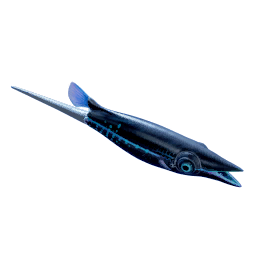
BlackthornA morph of Monopter astrapakantha which scavenges the charge crystals of dead hoverthorns. Genetically identical, but with distinct habitat, behavior and reproductive strategy.
1. Secondhand crystal
Blackthorns grow from eggs laid on the charge crystals of dead hoverthorns. The blackthorn fry depend on parental care to survive until they are large enough to use the crystal. Only one fry can inherit the crystal, so the parents engage in brood reduction.
2. Deepwater adaptations
The blackthorn's tissues and coloration are adapted for deep, dark water. Specimens in shallower waters may be drawn to sites of electrical activity.
3. Regulatory cascade
The difference between a hoverthorn and a blackthorn is a single genetic switch, activated during fetal development by the magnetic field of a charge crystal.
4. Crystal legacy
The death of a hoverthorn (or an older blackthorn) frees up a charge crystal for a new blackthorn to be born. The maximum blackthorn population is therefore equal to the number of hoverthorns who have ever lived. The charge crystal in the scanned index specimen is millions of years old, passed down from generation to generation.
5. Material competition
Alterra ecological models anticipate that the hoverthorn's jousting behavior should be magnified in the blackthorn, with ferocious competition over crystal falls. Crystals may be hoarded by relative alliances or offered as nuptial gifts.
Assessment: edible. Consider returning the charge crystal to the ocean after finishing your meal.

+15Food
-5Water


